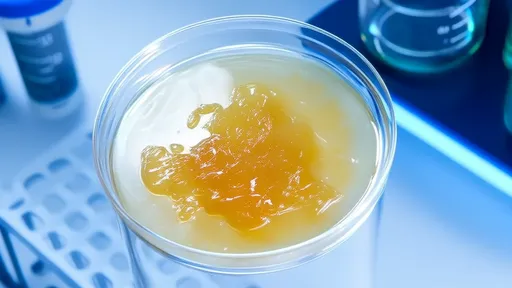
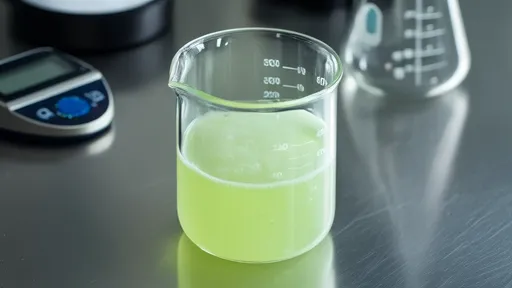
The viscosity of seaweed colloids, particularly in the context of kelp soup, has long fascinated both culinary experts and food scientists alike. The unique thickening properties of these marine-derived polysaccharides offer a natural alternative to synthetic thickeners, while also contributing distinct umami flavors. Recent studies have delved deeper into understanding the complex rheological behavior of these colloidal systems, revealing surprising connections between molecular structure and macroscopic texture.
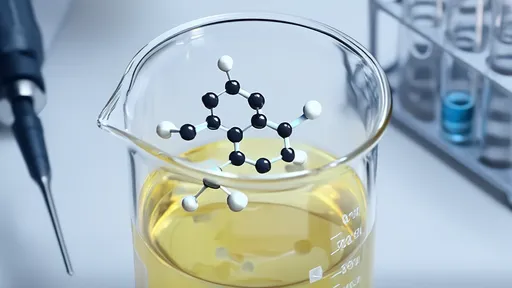
At the heart of this investigation lies the remarkable alginates - the primary gelling agents found in brown seaweeds like kelp. These linear copolymers of β-D-mannuronate and α-L-guluronate form viscous solutions that behave differently from conventional thickeners. What makes kelp soup particularly interesting is how these polysaccharides interact with the mineral content of seawater during the cooking process, creating a unique gel network that's neither too firm nor too watery.
The temperature dependence of kelp soup viscosity presents an intriguing paradox. Unlike many synthetic thickeners that lose viscosity when heated, properly prepared kelp broth actually develops better body and mouthfeel at serving temperatures between 60-70°C. This thermal hysteresis stems from the gradual alignment of alginate chains and their subsequent cross-linking through calcium ions naturally present in the seaweed. Professional chefs have empirically understood this phenomenon for generations, simmering their broths for hours to achieve the perfect consistency.
Seasonal variations in kelp composition significantly impact the resulting soup viscosity. Spring-harvested kelp tends to produce broths with higher viscosity coefficients due to greater alginate content accumulated during winter growth periods. The specific kelp species also plays a crucial role; Laminaria japonica typically yields more viscous extracts than its Atlantic counterpart Saccharina latissima. These biological variables create natural batch-to-batch differences that challenge industrial standardization but delight artisanal producers.
Modern analytical techniques like oscillatory rheometry have quantified what traditional cooks knew instinctively - that the perfect kelp soup should exhibit a loss tangent (tan δ) between 0.2-0.5, indicating an ideal balance between elastic and viscous properties. This viscoelastic sweet spot gives the soup its characteristic cling to chopsticks while still flowing smoothly when poured. The presence of other seaweed components like fucoidans introduces subtle shear-thinning behavior, making the soup feel thinner during active stirring but thicker at rest.
Regional preparation methods create fascinating viscosity variations across different culinary traditions. Japanese kombu dashi typically achieves lower viscosity coefficients (around 50-100 mPa·s) compared to Korean miyeok guk (often 200-300 mPa·s), reflecting cultural preferences in mouthfeel. These differences arise not just from cooking time variations, but from fundamental differences in kelp pretreatment - whether the seaweed is sun-dried, quick-dried, or used fresh after harvest.
The molecular weight distribution of extracted alginates proves crucial in determining soup viscosity. Industrial extraction methods that preserve high molecular weight fractions (above 200 kDa) yield superior thickening power, but artisanal slow-extraction techniques at lower temperatures often produce more complex flavor-viscosity profiles. This explains why some premium restaurants insist on making their kelp stock from scratch rather than using convenient powdered alternatives.
Surprisingly, the viscosity of kelp soup shows remarkable stability across pH ranges common in cooking (pH 4-8), unlike many other polysaccharide thickeners that degrade in acidic conditions. This pH resilience, combined with thermal stability, makes seaweed colloids particularly valuable in applications ranging from clear soups to creamy sauces. However, excessive acidity below pH 3 can disrupt the alginate network, causing undesirable syneresis or weeping in finished dishes.
Recent innovations in ultrasonic-assisted extraction have opened new possibilities for controlling kelp soup viscosity. Carefully tuned ultrasound waves can selectively break certain glycosidic bonds, allowing chefs to precisely tailor the molecular weight distribution of extracted alginates. This technology enables creation of kelp broths with identical flavor profiles but varying viscosity characteristics to suit different culinary applications - from light consommes to hearty stews.
The future of seaweed colloid research may lie in understanding their interactions with other hydrocolloids. Preliminary studies show that combining kelp extracts with small amounts of κ-carrageenan or xanthan gum can create synergistic viscosity effects while maintaining clean-label status. Such hybrid systems could help achieve textures previously only possible with synthetic additives, further expanding the culinary potential of this ancient ingredient.
As consumers increasingly seek natural, sustainable food ingredients, the viscosity-modifying properties of seaweed colloids are gaining renewed attention. Beyond traditional soups, chefs are experimenting with kelp-derived thickeners in everything from vegan cheeses to low-fat ice creams. The unique rheological properties developed over millions of years of seaweed evolution are now being harnessed to solve modern culinary challenges, bridging the gap between tradition and innovation.
By /Jul 24, 2025
By /Jul 24, 2025
By /Jul 24, 2025
By /Jul 24, 2025

By /Jul 24, 2025

By /Jul 24, 2025
By /Jul 24, 2025
By /Jul 24, 2025
By /Jul 24, 2025
By /Jul 24, 2025
By /Jul 24, 2025
By /Jul 24, 2025

By /Jul 24, 2025

By /Jul 24, 2025
By /Jul 24, 2025

By /Jul 24, 2025

By /Jul 24, 2025
By /Jul 24, 2025
By /Jul 24, 2025

By /Jul 24, 2025