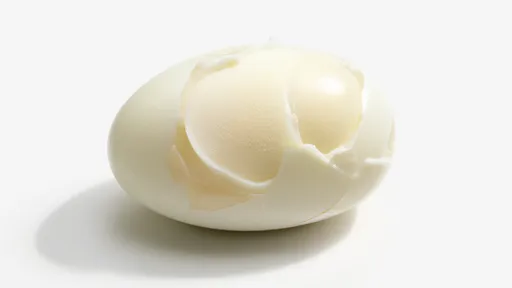
The humble boiled egg, a staple of breakfast tables worldwide, holds a secret beneath its smooth exterior. That flawless, almost porcelain-like surface of the egg white isn't just a happy accident of cooking – it's the handiwork of a remarkable protein called ovomucin. This unsung hero of egg chemistry creates an invisible shield that protects the delicate albumen while giving boiled eggs their characteristic sleek finish.
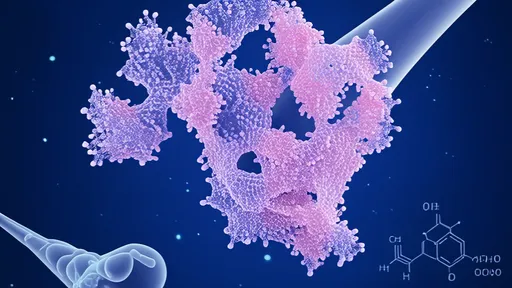
Ovomucin belongs to a family of glycoproteins found abundantly in egg whites, constituting nearly 2% of the total protein content. What makes this molecule extraordinary is its unique structure – long protein chains bristling with carbohydrate side groups that create a viscous, gel-like network. When an egg is fresh, this network remains dispersed throughout the liquid albumen. But as heat is applied during boiling, ovomucin undergoes a fascinating transformation.
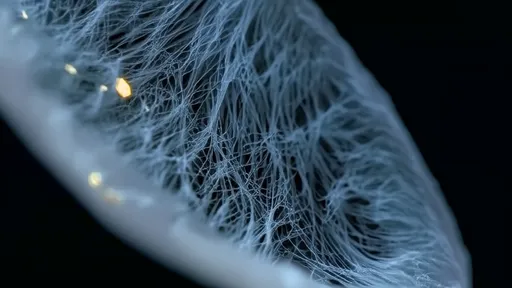
The cooking process causes ovomucin molecules to unfold and reorganize themselves near the egg's surface. Here, they form a microscopic mesh that acts like nature's perfect non-stick coating. This mesh performs dual duties – it prevents the egg white from sticking to the shell during cooking while creating that smooth, glossy surface we associate with perfectly boiled eggs. The phenomenon explains why fresh eggs often prove easier to peel than older ones; as eggs age, the ovomucin network breaks down, compromising this protective barrier.
Food scientists have discovered that the ovomucin layer does more than just provide aesthetic appeal. This protein shield serves as a remarkable moisture regulator, preventing excessive water loss during cooking while maintaining the egg white's tender texture. The carbohydrate components of ovomucin play a crucial role here, binding water molecules and creating a hydrated buffer zone between the boiling water and the delicate proteins of the egg white.
The protective qualities of ovomucin extend beyond the cooking process. Researchers have found that this glycoprotein contributes to the egg's natural defenses against microbial invasion. Its sticky molecular structure can trap potential pathogens, while its carbohydrate components may interfere with bacterial adhesion. This explains why intact boiled eggs can remain safe for consumption longer than many other protein-rich foods at room temperature.
Culinary experts have long observed that cooking techniques dramatically affect the ovomucin shield's effectiveness. Rapid boiling creates turbulence that can disrupt the delicate protein network, while gentle simmering allows for the formation of a more uniform protective layer. The ideal temperature for preserving this natural coating falls between 80-85°C, hot enough to set the proteins but gentle enough to maintain the ovomucin matrix's integrity.
The thickness and quality of the ovomucin layer vary significantly between different bird species. Chicken eggs tend to develop the most consistent coating, while duck and goose eggs often show more variation in their surface texture. This difference explains why these larger eggs frequently prove more challenging to peel cleanly after boiling. Even within chicken eggs, factors like diet, breed, and freshness influence the ovomucin network's development.
Modern food science has begun harnessing ovomucin's properties beyond the kitchen. Pharmaceutical researchers are investigating its potential as a drug delivery vehicle, thanks to its ability to form stable gels that protect sensitive compounds. Cosmetic chemists have explored its moisturizing capabilities for skincare products. Yet despite these advanced applications, ovomucin's most visible impact remains its role in creating that perfect boiled egg surface that has delighted cooks and diners for centuries.
Next time you peel a boiled egg and admire its smooth, blemish-free surface, take a moment to appreciate the complex biochemistry at work. That flawless exterior represents millions of ovomucin molecules performing an intricate dance of protein folding and water management – nature's elegant solution to protecting one of its most nutritionally complete foods. The egg's natural packaging proves as ingenious as the contents it protects.
By /Jul 24, 2025
By /Jul 24, 2025
By /Jul 24, 2025
By /Jul 24, 2025
By /Jul 24, 2025
By /Jul 24, 2025
By /Jul 24, 2025
By /Jul 24, 2025
By /Jul 24, 2025
By /Jul 24, 2025
By /Jul 24, 2025
By /Jul 24, 2025
By /Jul 24, 2025
By /Jul 24, 2025
By /Jul 24, 2025
By /Jul 24, 2025
By /Jul 24, 2025
By /Jul 24, 2025
By /Jul 24, 2025
By /Jul 24, 2025