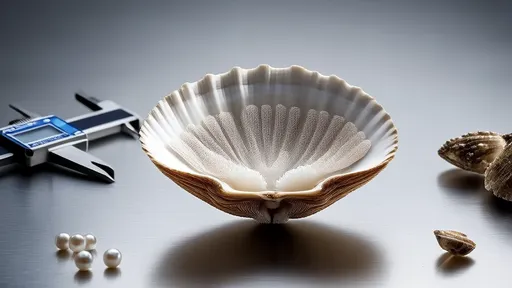
The culinary world has long prized scallops for their delicate flavor and unique texture, but few diners realize the remarkable biomechanics behind their favorite seafood. A new wave of scientific research is focusing on the scallop's adductor muscle - that plump, cylindrical morsel chefs call the "scallop muscle" or "scallop column" - to understand what gives this mollusk its characteristic resilience.
Marine biologists and food scientists have joined forces to investigate the mechanical properties of scallop adductor muscles using advanced testing equipment. Their findings could revolutionize both seafood processing techniques and biomimetic material design. The studies reveal how this evolutionary marvel maintains its structural integrity despite the scallop's vigorous clapping motions that propel it through water.
Underwater Engineering Marvel
Scallops possess one of nature's most efficient locomotive systems. Their large adductor muscle, which makes up the edible portion, can contract up to five times per second when the mollusk needs to make a quick escape. This rapid-fire clapping action subjects the muscle to tremendous mechanical stress that would tear most biological tissues apart.
Researchers subjected fresh scallop muscles to controlled tension, compression, and shear forces using specialized food texture analyzers. The tests measured parameters like Young's modulus (stiffness), yield strength (point of permanent deformation), and toughness (energy absorption before breaking). Preliminary results show scallop muscle tissue exhibits unique viscoelastic properties that allow it to behave like both a solid and liquid under different stresses.
Culinary Implications Meet Marine Biology
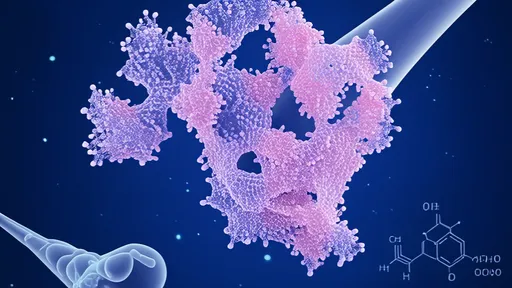
Chefs have empirically known for centuries that proper cooking transforms the scallop's texture from rubbery to tender yet resilient. The new mechanical testing helps explain why. At the molecular level, the adductor muscle contains an unusually high concentration of paramyosin proteins arranged in staggered filaments. These proteins form elastic connections between thick myosin filaments that prevent tearing during rapid contractions.
Food technologists are particularly interested in how these findings could improve seafood processing. Current mechanical shucking methods often damage the precious adductor muscle. By understanding its stress tolerance limits, engineers could design gentler automated systems that preserve more of the scallop's valuable meat.
Biomimetic Potential
Beyond gastronomy, materials scientists see potential applications in soft robotics and medical implants. The scallop muscle's ability to maintain structural integrity during rapid, repetitive motions makes it an ideal model for designing artificial muscles or flexible joints. Several research teams are attempting to synthesize polymer networks that mimic the mollusk's unique protein architecture.
One surprising discovery involves how the muscle's properties change with the scallop's age. Younger specimens show greater elasticity but lower yield strength, while mature scallops develop tougher, more rigid muscles. This developmental trajectory suggests the protein fibers undergo natural cross-linking over time, similar to collagen maturation in mammalian tendons.
Seasonal Variations and Environmental Factors
The research also uncovered significant seasonal variations in mechanical properties. Scallops harvested in winter months consistently showed 15-20% greater toughness than summer specimens. Scientists attribute this to metabolic changes related to water temperature and food availability. Such findings could lead to more precise seasonal harvesting guidelines to ensure optimal product quality.
Pollution appears to negatively impact the muscle's mechanical performance. Scallops from areas with heavy boat traffic or agricultural runoff exhibited weaker structural integrity and lower fatigue resistance. This suggests the adductor muscle's resilience could serve as a biomarker for marine ecosystem health.
Future Research Directions
Ongoing studies are investigating how different cooking methods alter the muscle's mechanical properties at the microscopic level. Early results indicate that gentle poaching preserves more of the natural springiness compared to high-heat searing. Another promising avenue explores genetic differences between wild and farmed scallop populations.
As research continues, one thing becomes clear: the humble scallop's adductor muscle represents a perfect marriage of culinary delight and biomechanical sophistication. Its unique properties continue to inspire innovations across multiple scientific disciplines while reminding us that nature often creates the most elegant solutions to engineering challenges.
By /Jul 24, 2025
By /Jul 24, 2025
By /Jul 24, 2025
By /Jul 24, 2025

By /Jul 24, 2025
By /Jul 24, 2025
By /Jul 24, 2025
By /Jul 24, 2025
By /Jul 24, 2025
By /Jul 24, 2025
By /Jul 24, 2025
By /Jul 24, 2025
By /Jul 24, 2025

By /Jul 24, 2025
By /Jul 24, 2025

By /Jul 24, 2025

By /Jul 24, 2025
By /Jul 24, 2025
By /Jul 24, 2025
By /Jul 24, 2025