Indoor Vertical Farm Purification Efficiency

Jul 21, 2025 By

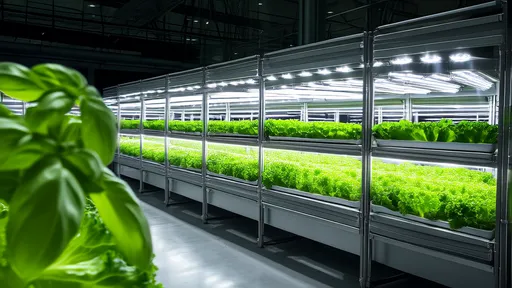
In recent years, indoor vertical farming has emerged as a revolutionary approach to sustainable agriculture, offering a promising solution to the challenges of urbanization, climate change, and food security. Beyond its primary role in food production, this innovative farming method has demonstrated significant potential in improving air quality and environmental purification. The concept of growing crops in stacked layers within controlled environments is not just about maximizing space—it’s about redefining how agriculture interacts with urban ecosystems.

The purification efficacy of indoor vertical farms stems from the natural biological processes of plants. As crops grow, they absorb carbon dioxide and release oxygen through photosynthesis, effectively acting as natural air filters. However, what sets vertical farms apart is their ability to optimize these processes in densely populated urban areas where green spaces are limited. By integrating advanced HVAC systems and air circulation technologies, these farms can capture and neutralize airborne pollutants, including volatile organic compounds (VOCs) and particulate matter, which are common in cities.

One of the most compelling aspects of indoor vertical farming is its scalability. Unlike traditional farms, which require vast tracts of land, vertical farms can be established in repurposed buildings, warehouses, or even underground facilities. This adaptability allows them to be strategically placed in pollution hotspots, such as industrial zones or high-traffic areas, where their air-purifying capabilities can have the most significant impact. Studies have shown that certain crops, like leafy greens and herbs, are particularly effective at removing toxins from the air, making them ideal choices for these systems.

The controlled environment of vertical farms also enables precise monitoring and enhancement of purification processes. By adjusting factors such as light intensity, humidity, and nutrient delivery, operators can maximize the plants' metabolic rates, thereby boosting their air-cleaning performance. For instance, research indicates that exposing plants to specific wavelengths of LED light can accelerate photosynthesis, leading to faster carbon sequestration and higher oxygen output. This level of control is simply unattainable in traditional outdoor farming.

Water usage is another critical factor that contributes to the environmental benefits of vertical farming. These systems typically employ hydroponic or aeroponic techniques, which use up to 95% less water than conventional agriculture. The closed-loop design ensures that water is continuously recycled, minimizing waste and preventing the runoff of harmful fertilizers or pesticides into surrounding ecosystems. This not only conserves precious resources but also reduces the overall ecological footprint of food production.

Beyond air and water purification, indoor vertical farms can play a role in mitigating urban heat islands. The transpiration process—where plants release moisture into the air—has a cooling effect on their surroundings. When implemented on a large scale, vertical farms could help regulate temperatures in densely built urban areas, reducing the energy demand for air conditioning and improving overall livability. Some forward-thinking cities have already begun to explore this potential by incorporating vertical farms into urban planning initiatives.

The integration of renewable energy sources further enhances the sustainability of these systems. Many vertical farms are now powered by solar panels or wind turbines, ensuring that their operations remain carbon-neutral. When combined with their purification capabilities, this makes them a truly holistic solution for urban environmental challenges. Innovations in energy storage and smart grid technology are expected to make these systems even more efficient in the coming years.

Despite these advantages, the widespread adoption of indoor vertical farming for environmental purification faces certain hurdles. High initial setup costs and energy consumption remain significant barriers, particularly in developing regions. However, as technology advances and economies of scale come into play, these challenges are likely to diminish. Governments and private investors are increasingly recognizing the long-term value of these systems, leading to greater funding and support for research and development.

Public awareness and education will also be crucial in driving the adoption of vertical farming for environmental purposes. Many people still perceive these facilities as mere food producers, overlooking their potential as tools for urban revitalization and pollution control. Highlighting successful case studies—such as vertical farms that have measurably improved local air quality—could help shift perceptions and encourage broader implementation.

Looking ahead, the convergence of biotechnology, automation, and data analytics promises to unlock even greater purification capabilities in vertical farming. Imagine farms equipped with AI-driven systems that can dynamically adjust environmental parameters based on real-time pollution data, or genetically optimized plants designed specifically for maximum air filtration. These advancements could transform vertical farms into active participants in urban environmental management, rather than passive food production sites.

The purification efficacy of indoor vertical farming represents more than just an agricultural innovation—it’s a paradigm shift in how we think about the relationship between food systems and environmental health. As cities continue to grow and environmental pressures intensify, these controlled ecosystems offer a viable path toward cleaner air, efficient resource use, and sustainable urban living. While challenges remain, the potential benefits make this an area worthy of continued exploration and investment.

Recommend Posts
Health

Applications of Quantum Computing in Drug Development

By /Jul 21, 2025

The intersection of quantum computing and pharmaceutical research is ushering in a new era of drug discovery. For decades, the process of developing new medications has been painstakingly slow, often taking over a decade and billions of dollars to bring a single drug to market. Now, quantum computing promises to revolutionize this field by solving complex molecular simulations that are beyond the reach of classical computers. This technological leap could dramatically accelerate the identification of promising drug candidates and reduce the time and cost associated with bringing life-saving treatments to patients.
Health

Health Big Data Bias Correction Model

By /Jul 21, 2025

The field of health data analytics has witnessed remarkable advancements in recent years, with bias correction models emerging as a critical tool for improving the accuracy and reliability of large-scale health datasets. As healthcare systems increasingly rely on data-driven decision-making, addressing inherent biases in health data has become paramount to ensuring equitable and effective outcomes.
Health

Virtual Reality Pain Management Protocol

By /Jul 21, 2025

The intersection of technology and healthcare has birthed one of the most promising innovations in pain management: virtual reality (VR). What was once a tool primarily for gaming and entertainment is now being leveraged to alleviate acute and chronic pain in patients across the globe. The concept might seem futuristic, but the science behind it is grounded in decades of research on how the brain processes pain. By immersing patients in a carefully crafted digital environment, VR disrupts pain signals, offering relief without the side effects associated with pharmaceuticals.
Health

Durable Antimicrobial Surface Materials

By /Jul 21, 2025

The development of antimicrobial surface materials has gained significant attention in recent years, particularly in healthcare, food processing, and public spaces where hygiene is paramount. These materials are designed to inhibit the growth of bacteria, viruses, and fungi, reducing the risk of infections and contamination. However, one of the most critical challenges in this field is ensuring the long-term durability of these antimicrobial properties. Without sustained effectiveness, the benefits of such materials diminish over time, rendering them less useful in real-world applications.
Health

Deep-Sea Workers' High-Pressure Physiological Adaptation

By /Jul 21, 2025

The world beneath the ocean's surface has always fascinated humanity, yet its depths remain one of the least explored frontiers. For those who venture into the abyss—whether divers, submariners, or researchers—the crushing pressures of the deep present a formidable challenge. The human body, evolved for life at sea level, must undergo remarkable physiological adaptations to survive in these extreme conditions. Understanding how deep-sea workers cope with high-pressure environments is not just a scientific curiosity; it’s a matter of life and death for those who make their living in the ocean’s unforgiving embrace.
Health

Health Assessment of Urban Green Space Accessibility

By /Jul 21, 2025

As cities continue to expand, the importance of accessible green spaces has become a critical topic in urban planning and public health research. The ability of residents to easily reach parks, gardens, and other natural environments directly influences physical activity levels, mental well-being, and overall quality of life. Recent studies highlight how disparities in green space accessibility often mirror socioeconomic divides, leaving marginalized communities at a disadvantage when it comes to reaping the health benefits of nature.
Health

Blockchain Ensures the Security of Electronic Health Records

By /Jul 21, 2025

The healthcare industry is undergoing a digital transformation, with electronic health records (EHRs) becoming the backbone of modern patient care. However, as these records transition from paper to digital formats, concerns about data security, privacy, and interoperability have taken center stage. Blockchain technology, often associated with cryptocurrencies, is now emerging as a promising solution to safeguard sensitive health data while ensuring seamless access for authorized parties.
Health

Humidity and Temperature Coupling Control of Respiratory Defense

By /Jul 21, 2025

For centuries, humans have intuitively understood that environmental conditions influence health, particularly respiratory well-being. The ancient Greeks noted seasonal variations in disease prevalence, while traditional Chinese medicine emphasized the importance of balanced environmental factors. Modern science now confirms what our ancestors suspected – temperature and humidity don't merely create comfort or discomfort; they actively shape our respiratory system's ability to defend against pathogens.
Health

New Protocol for Astronaut Bone Density Maintenance

By /Jul 21, 2025

The challenges of long-duration spaceflight have pushed medical researchers to develop increasingly sophisticated countermeasures against microgravity's deleterious effects. Among the most persistent problems facing astronauts is the progressive loss of bone mineral density that occurs at a rate roughly ten times faster than Earthbound osteoporosis patients. After years of clinical trials aboard the International Space Station, NASA has finally approved a comprehensive new protocol that promises to dramatically reduce this health risk for crews embarking on lunar and Martian missions.
Health

Elevator Button Microorganism Transmission Model

By /Jul 21, 2025

In the age of heightened hygiene awareness, the humble elevator button has emerged as an unlikely villain in microbial transmission. Recent studies have revealed that these frequently touched surfaces serve as hotspots for pathogen exchange, with some strains surviving for hours or even days. The combination of high human traffic and infrequent cleaning creates a perfect storm for microbial colonization. Researchers are now mapping the complex journey of microbes from fingertips to buttons and back again, revealing surprising patterns in how we share more than just space in crowded elevators.
Health

Research on the Benefits of Building Acoustic Isolation for Cardiovascular Health

By /Jul 21, 2025

The relationship between architectural acoustics and cardiovascular health has emerged as a fascinating area of interdisciplinary research in recent years. As urban populations continue to grow and noise pollution becomes an increasingly pressing public health concern, scientists are uncovering compelling evidence about how building insulation against sound may offer significant benefits for heart health. This connection between our built environment and physiological wellbeing challenges traditional notions of disease prevention and points toward innovative approaches for promoting cardiovascular wellness.
Health

Evidence-Based Research on Digital Therapeutics for Insomnia Treatment

By /Jul 21, 2025

Insomnia affects millions worldwide, disrupting sleep and diminishing quality of life. Traditional treatments like cognitive behavioral therapy for insomnia (CBT-I) and medications have limitations, from accessibility issues to side effects. In recent years, digital therapeutics (DTx) have emerged as a promising alternative, leveraging technology to deliver evidence-based interventions. Research increasingly supports their efficacy, offering scalable solutions for those struggling with chronic sleep disturbances.
Health

Confidence Analysis of AI-Interpreted Medical Imaging

By /Jul 21, 2025

The integration of artificial intelligence (AI) into medical imaging has revolutionized diagnostic processes, offering unprecedented speed and accuracy. However, one critical aspect that continues to shape its adoption is the concept of confidence analysis—how reliably AI systems interpret medical images and communicate their certainty levels. This emerging field bridges the gap between raw algorithmic outputs and clinically actionable insights, ensuring that healthcare providers can trust AI-generated results while understanding their limitations.
Health

Intelligent Contact Lens for Intraocular Pressure Monitoring

By /Jul 21, 2025

The advent of smart contact lenses for intraocular pressure (IOP) monitoring represents a groundbreaking leap in ophthalmology and wearable health technology. These lenses, embedded with microsensors and wireless communication capabilities, offer a continuous and non-invasive method to track eye pressure, a critical metric for managing glaucoma and other ocular conditions. Unlike traditional methods that require periodic clinic visits, smart lenses provide real-time data, empowering both patients and physicians with actionable insights.
Health

Indoor Vertical Farm Purification Efficiency

By /Jul 21, 2025

In recent years, indoor vertical farming has emerged as a revolutionary approach to sustainable agriculture, offering a promising solution to the challenges of urbanization, climate change, and food security. Beyond its primary role in food production, this innovative farming method has demonstrated significant potential in improving air quality and environmental purification. The concept of growing crops in stacked layers within controlled environments is not just about maximizing space—it’s about redefining how agriculture interacts with urban ecosystems.
Health

Medical Internet of Things Device Interoperability Standards

By /Jul 21, 2025

As the healthcare industry continues its rapid digital transformation, the Internet of Medical Things (IoMT) has emerged as a critical enabler of patient-centered care. However, the lack of universal interoperability standards threatens to undermine the potential of these connected devices. The growing ecosystem of wearable monitors, implantable sensors, and remote diagnostic tools generates vast amounts of data that could revolutionize treatment protocols—if only these systems could communicate seamlessly.
Health

Recent Advances in Flexible Electronic Skin for Health Monitoring

By /Jul 21, 2025

The field of wearable health technology has taken a monumental leap forward with the rapid development of flexible electronic skin (e-skin). This groundbreaking innovation, which mimics the properties of human skin while incorporating advanced sensing capabilities, is transforming how we monitor vital health metrics in real-time. Unlike traditional rigid wearables, e-skin conforms seamlessly to the body, enabling continuous, unobtrusive health tracking without compromising comfort or mobility.
Health

Volatile Organic Compound Emission Profiles of Furniture Materials

By /Jul 21, 2025

When selecting furniture for homes or offices, most consumers prioritize aesthetics, comfort, and durability. However, an often-overlooked factor is the emission of volatile organic compounds (VOCs) from these materials. VOCs are carbon-based chemicals that easily evaporate at room temperature, releasing gases that can affect indoor air quality and human health. The study of VOC emission curves—how these compounds are released over time—provides critical insights into the safety and environmental impact of furniture materials.
Health

Non-Invasive Blood Glucose Monitoring with Multispectral Technology

By /Jul 21, 2025

For decades, diabetes management has relied on invasive blood glucose monitoring methods, requiring finger pricks and disposable test strips. While effective, these techniques are often painful, inconvenient, and costly over time. In recent years, researchers and tech companies have intensified efforts to develop non-invasive alternatives, with multispectral technology emerging as one of the most promising solutions.
Health

Pilot Circadian Rhythm Regulation

By /Jul 21, 2025

The aviation industry has long grappled with the challenges posed by circadian rhythm disruptions among pilots. These biological clocks, which regulate sleep-wake cycles, are frequently thrown into disarray by irregular flight schedules, time zone crossings, and overnight operations. The consequences extend far beyond mere fatigue – they directly impact flight safety, operational efficiency, and pilot wellbeing in ways that demand urgent attention.