The intersection of quantum computing and pharmaceutical research is ushering in a new era of drug discovery. For decades, the process of developing new medications has been painstakingly slow, often taking over a decade and billions of dollars to bring a single drug to market. Now, quantum computing promises to revolutionize this field by solving complex molecular simulations that are beyond the reach of classical computers. This technological leap could dramatically accelerate the identification of promising drug candidates and reduce the time and cost associated with bringing life-saving treatments to patients.
Understanding the Quantum Advantage in Drug Discovery
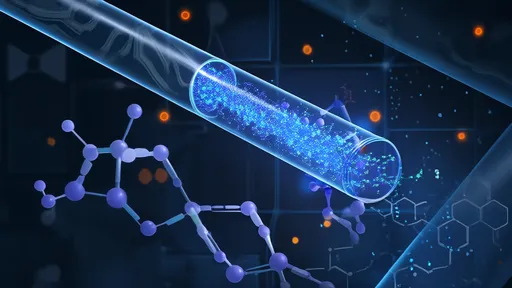
At the heart of quantum computing's potential in pharmaceuticals lies its ability to model molecular interactions with unprecedented accuracy. Traditional computers struggle with the complexity of quantum mechanics governing molecular behavior. Even supercomputers can only approximate the behavior of relatively simple molecules. Quantum computers, however, operate using qubits that can exist in multiple states simultaneously, allowing them to naturally simulate quantum systems. This capability is particularly valuable when studying how potential drug molecules interact with target proteins or other biological structures.
The pharmaceutical industry has taken notice of this potential. Major players like Roche, Pfizer, and Merck have already begun exploring quantum computing applications through partnerships with quantum technology firms. These collaborations aim to tackle some of the most challenging aspects of drug development, such as predicting protein folding patterns or simulating the interaction between drug candidates and cellular receptors. Early results suggest that quantum algorithms could provide insights that would take conventional methods years to uncover.
Breaking Through Computational Barriers
One of the most promising applications of quantum computing in drug research involves molecular docking simulations. These simulations attempt to predict how well a potential drug molecule will bind to its target protein. Accurate docking predictions could eliminate millions of dollars wasted on synthesizing and testing compounds that ultimately prove ineffective. While classical computers can perform these simulations to some degree, they must make numerous approximations that reduce accuracy. Quantum computers could theoretically perform these calculations with far greater precision, potentially revealing binding affinities and interaction mechanisms that would otherwise remain hidden.
Another area where quantum computing shows tremendous promise is in the simulation of chemical reactions. Understanding reaction pathways is crucial for developing efficient synthesis methods for new drugs. Quantum computers could model these pathways at an atomic level, helping chemists identify the most promising synthetic routes before any lab work begins. This capability could significantly reduce the trial-and-error approach that currently dominates pharmaceutical chemistry, saving both time and resources.
The Challenge of Noisy Intermediate-Scale Quantum (NISQ) Era
While the potential is enormous, significant hurdles remain before quantum computing becomes a routine tool in drug discovery. Current quantum computers operate in what's known as the Noisy Intermediate-Scale Quantum (NISQ) era. These machines have limited qubits that are prone to errors and decoherence. Researchers are developing error-correction techniques and hybrid algorithms that combine classical and quantum computing to work around these limitations. Pharmaceutical companies are particularly interested in these hybrid approaches, as they offer a practical way to begin benefiting from quantum advantages today while waiting for more powerful, fault-tolerant quantum computers to emerge.
Several startups have emerged to bridge this gap between quantum potential and practical pharmaceutical applications. Companies specializing in quantum chemistry algorithms are working closely with drug developers to create software that can run on existing quantum hardware. These solutions often focus on specific, well-defined problems where even limited quantum advantage can provide meaningful insights. For example, some companies are developing quantum-inspired algorithms that can run on classical computers but incorporate principles from quantum mechanics to improve molecular modeling accuracy.
Ethical Considerations and Future Outlook
As with any transformative technology, the application of quantum computing in drug development raises important ethical questions. The potential to dramatically accelerate drug discovery could lead to concerns about adequate safety testing or the possibility of developing powerful pharmaceuticals that could be misused. Additionally, the high cost of quantum computing resources might initially limit access to large pharmaceutical companies, potentially creating disparities in innovation capacity. The field will need to address these concerns as the technology matures and becomes more widely available.
Looking ahead, experts predict that quantum computing will first make an impact in specific niches of drug discovery before becoming more broadly applicable. Areas like fragment-based drug design, where small molecular fragments are optimized to improve binding affinity, appear particularly well-suited for early quantum applications. As quantum hardware improves and algorithms become more sophisticated, the technology's role in pharmaceutical research will likely expand to encompass more aspects of the drug development pipeline.
The marriage of quantum computing and pharmaceutical research represents one of the most exciting frontiers in both fields. While challenges remain, the potential to transform how we discover and develop new medicines is too significant to ignore. As quantum technology continues to advance, we may be on the cusp of a new paradigm in drug discovery—one where complex diseases that have resisted treatment for decades finally meet their match through the power of quantum computation.
By /Jul 21, 2025

By /Jul 21, 2025

By /Jul 21, 2025
By /Jul 21, 2025

By /Jul 21, 2025

By /Jul 21, 2025

By /Jul 21, 2025
By /Jul 21, 2025

By /Jul 21, 2025
By /Jul 21, 2025

By /Jul 21, 2025

By /Jul 21, 2025

By /Jul 21, 2025

By /Jul 21, 2025

By /Jul 21, 2025
By /Jul 21, 2025
By /Jul 21, 2025

By /Jul 21, 2025
By /Jul 21, 2025

By /Jul 21, 2025